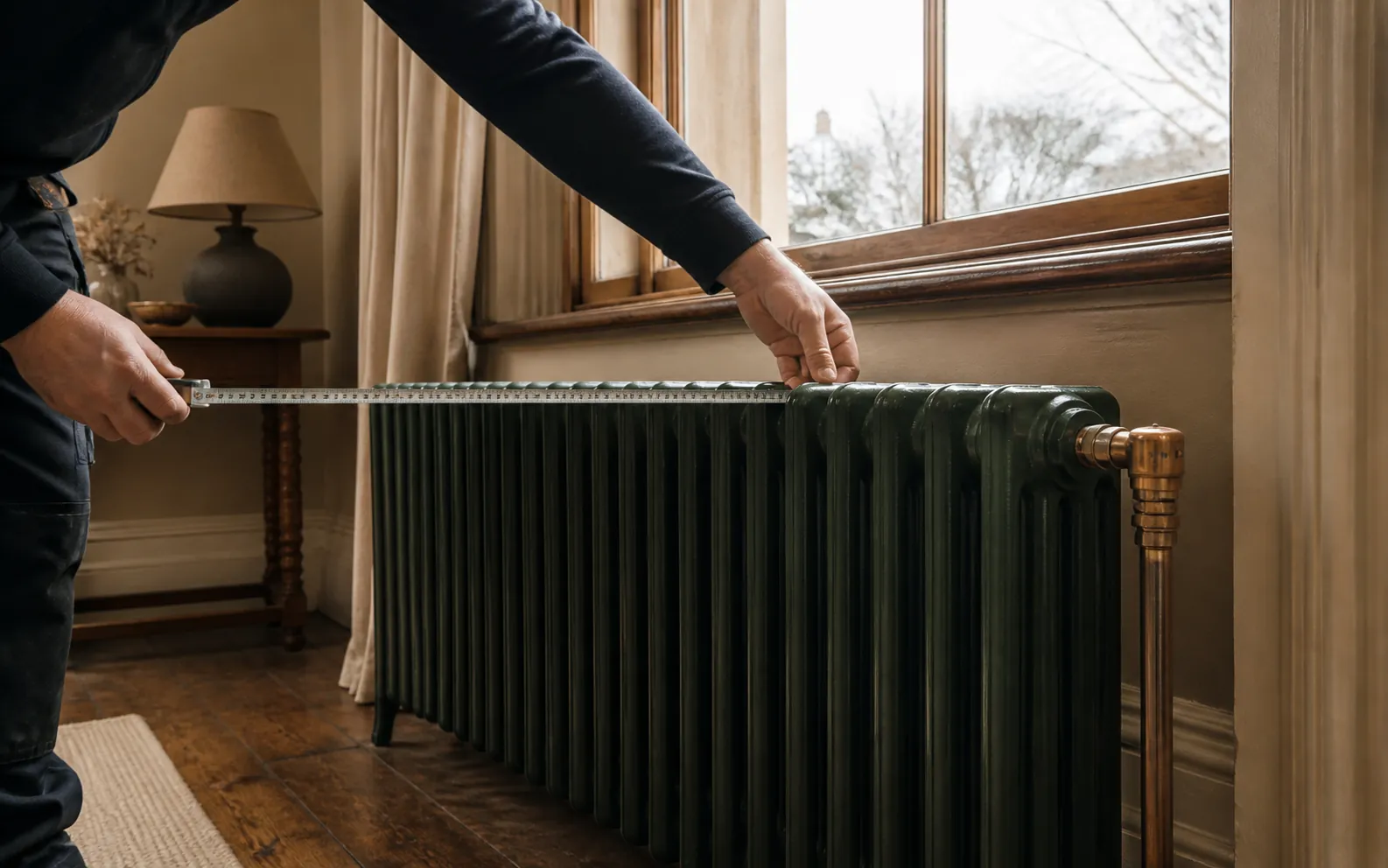
Why Radiator Sizing Matters
Choosing a new radiator is not just about picking a design you like and a size that fits neatly under your window. It is fundamentally about thermal engineering. A radiator’s primary job is to emit enough heat to keep a specific room at a comfortable temperature, counteracting the natural heat loss of the building.
If you install a radiator that is too small for the room, you will be cold. It is that simple. The boiler will fire, the radiator will get hot to the touch, but the heat output will simply not be sufficient to warm the volume of air in the room. You will end up turning the thermostat up, forcing your boiler to work constantly in a futile attempt to reach the target temperature, burning expensive fuel and wasting money.
Conversely, while an oversized radiator will certainly heat the room, it brings its own problems. It costs more to buy initially, it takes up valuable wall space unnecessarily, and it can cause the room to heat up so rapidly that the space becomes stuffy and uncomfortable before the thermostat has a chance to turn the system off. Getting the size exactly right is the key to comfort and efficiency.
Moving From BTUs to Physical Dimensions
Most people understand that they need a BTU (British Thermal Unit) calculation first. Once you have determined that your room requires, for example, 5,000 BTUs to stay warm, the next challenge is translating that abstract number into the physical dimensions of a radiator.
This is where the Radiator Size Calculator becomes invaluable. It bridges the gap between the thermal requirement and the physical reality of the products available on the market. Manufacturers produce radiators in a huge variety of heights, widths, and panel configurations. A single-panel radiator that is 1200mm wide might produce the same heat as a double-panel radiator that is only 600mm wide.
By inputting your target heat output, this tool helps you visualize the physical space required on your wall. It allows you to play with different configurations. If you have limited wall space, the calculator will show you that you need to look at double or even triple convector models to hit your heat target within those dimensional constraints.
Understanding Convector Types (Type 11, 21, 22)
When using the calculator and shopping for standard steel panel radiators, you will encounter the terms Type 11, Type 21, and Type 22. Understanding these terms is crucial for getting the right size.
- Type 11 (Single Panel, Single Convector): These are slim radiators with one water-filled panel and one set of zigzagging convector fins attached to the back. They take up the least space protruding from the wall but have the lowest heat output for their size.
- Type 21 (Double Panel, Single Convector): These have two water panels (front and back) but only one set of convector fins sandwiched between them. They offer a good middle ground of heat output and slim profile.
- Type 22 (Double Panel, Double Convector): These are the workhorses of domestic heating. They feature two water panels and two sets of fins. They are thicker and stick out further into the room, but they deliver maximum heat output for their width and height.
The calculator allows you to see how choosing a Type 22 instead of a Type 11 drastically reduces the required width of the radiator, helping you fit powerful heating into tight spaces.
Window Placement and Radiator Width
Traditionally, radiators are placed under windows. This is not just an aesthetic convention; it is based on sound physics. The coldest air in the room drops down from the window glazing. By placing the radiator underneath, the hot air rising from the radiator meets this cold downdraft, warming it and pushing it into the center of the room, creating a circular convection current.
When sizing a radiator for under a window, width is often the primary constraint. You generally want the radiator to be roughly the same width as the window to counteract the cold downdraft effectively. However, it must also fit between the skirting boards and leave enough clearance for the valves on either side.
The calculator helps you input your maximum available width (the space under the window) and then tells you what type of radiator (single or double panel) you will need to hit your BTU target within that specific width constraint.
Designer Radiators vs. Standard Panels
The heating market has evolved, and homeowners are no longer restricted to plain white corrugated steel panels. Designer radiators, column radiators, and vertical models are incredibly popular.
However, these aesthetic choices often come with a trade-off in heat output. A sleek, flat-panel designer radiator or a traditional cast-iron style column radiator will often produce significantly less heat than a standard Type 22 convector radiator of the exact same physical size.
This makes the Radiator Size Calculator even more critical. If you are swapping out an old, ugly Type 22 radiator for a beautiful new vertical designer model, you cannot simply buy one of the same physical dimensions. You must use the calculator to ensure the new model provides the same BTU output, which almost always means the designer radiator needs to be significantly larger in physical size than the one it replaces.
Frequently Asked Questions
How much space do I need to leave for valves? You should generally allow an extra 100mm to 150mm on the overall width of the radiator space to accommodate the manual or thermostatic radiator valves (TRVs) on the pipework.
Can I put a radiator behind a sofa? You can, but it will block a significant amount of the radiant heat. If you must place a radiator behind large furniture, you should increase the target BTU requirement for that radiator by at least 20% to compensate for the blocked airflow.
What is the difference between Delta T50 and Delta T60? These terms refer to the water temperature inside the system. Older boiler systems run hotter (Delta T60), while modern condensing boilers and heat pumps run cooler (Delta T50 or lower). Make sure you know what system you have, as a radiator will output fewer BTUs on a cooler Delta T50 system than it will on a Delta T60 system.
By using this calculator to translate your heating needs into physical dimensions, you ensure your new radiators will fit perfectly and keep your home brilliantly warm all winter long.